
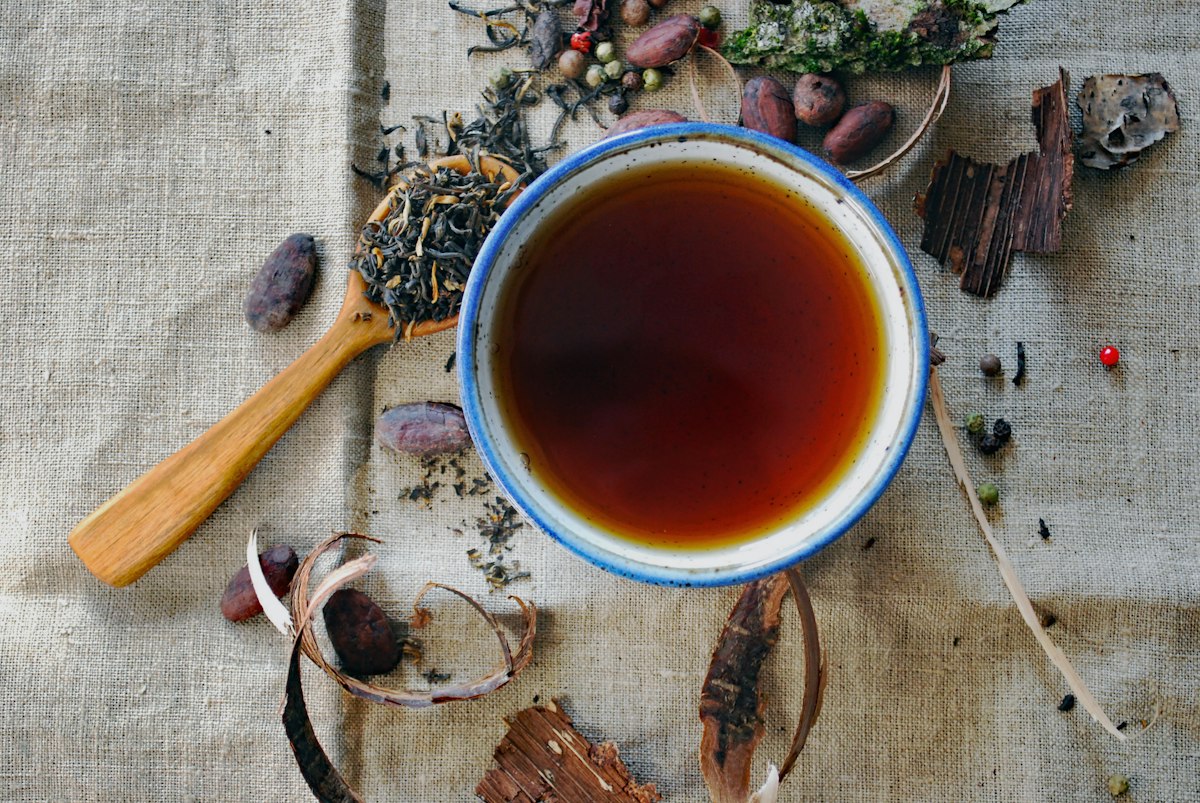
Chai is made of spices. Spices have no caffeine. Once you understand that, making a completely satisfying decaf chai latte — with creamy oat milk — becomes the simplest thing in the world.
Yes, chai can absolutely be decaf. There are three ways to do it: switch to decaffeinated black tea, use rooibos as a naturally caffeine-free base, or skip the tea entirely and use the chai spice blend alone in milk. All three produce a full-flavoured chai latte. The spices — cinnamon, cardamom, ginger, cloves, and black pepper — contain no caffeine and are unchanged by any decaf approach. Paired with oat milk, decaf chai becomes one of the most satisfying all-day and any-time-of-day drinks you can make.
People discover they want decaf chai from all sorts of directions. Some are pregnant and cutting caffeine. Some lie awake after an afternoon cup and have finally decided to do something about it. Some are managing anxiety and realise that even the moderate caffeine in chai is pushing the needle in the wrong direction. And some simply want a warm, comforting drink at 9 p.m. without staring at the ceiling until 1 a.m.
Whatever the reason, the question is usually the same: can chai actually be decaf without losing what makes it taste like chai? And the answer — once you understand what chai actually is — is a clear and encouraging yes.
Chai is a spice blend first. It's cinnamon, cardamom, ginger, cloves, and pepper, combined with milk and a sweetener. The black tea that most people associate with chai is just the liquid vehicle those spices travel in. Change the vehicle — switch to decaf tea, rooibos, or just use milk directly — and the flavour experience changes surprisingly little.
This article covers all three decaf methods in detail, with an honest comparison of how each affects the taste and experience. It also goes deep on why oat milk has become the paired choice of choice for decaf chai, how to make both hot and iced versions, and what to do when something isn't tasting quite right.
Is Chai Caffeinated? Understanding Where the Caffeine Actually Comes From
Most chai lattes are caffeinated because they're made with black tea — and black tea contains caffeine. That's the complete story of where chai's caffeine comes from. Not the spices. Not the milk. Not the sweetener. Just the tea.
Traditional masala chai is brewed by simmering black tea with spices, water, and milk together, often in a concentrated form. The black tea typically used — Assam, Darjeeling, or a strong breakfast tea blend — contains between 40 and 70 milligrams of caffeine per 8-ounce cup when steeped normally. When the tea is brewed as a concentrate for a chai latte, and then diluted with milk in roughly a 1:1 ratio, the final caffeine in your cup is somewhere in the range of 25 to 55 milligrams depending on the strength of the original brew.
That's considerably less than a cup of coffee (typically 95–200mg) but enough to meaningfully affect people who are caffeine-sensitive, pregnant, managing anxiety, or trying to improve their sleep. The moderate caffeine position of chai latte sits in an uncomfortable middle ground: too much for some people, too little to satisfy others who want a genuine caffeine hit. Decaffeinating chai neatly solves the first group's problem without affecting the spice experience that makes chai worth drinking in the first place.
- Standard chai latte (black tea base): 25–55mg caffeine per cup
- Chai latte with decaf black tea: 2–5mg trace caffeine
- Chai latte with rooibos: 0mg caffeine
- Chai latte spice-only (no tea): 0mg caffeine
- Regular brewed coffee (for comparison): 95–200mg
- Starbucks chai latte, grande: approximately 95mg (uses a concentrated black tea base)
One thing worth knowing: not all café chai lattes use a simple black tea base. Starbucks, for example, uses a pre-made chai concentrate that's significantly stronger than home-brewed chai — a grande chai latte from Starbucks contains approximately 95mg of caffeine, much closer to coffee than to home-brewed chai. If you're managing caffeine for health reasons and have been assuming your coffee-shop chai latte is relatively low in caffeine, it's worth checking the specific brand or asking your café what concentrate they use.
The Three Ways to Make Chai Decaf — and Which One Suits You
You have three genuinely distinct options for making chai decaf, and each produces a slightly different result. Understanding the differences helps you choose the right one rather than defaulting to whichever seems most obvious.
Decaffeinated black tea
Replace regular black tea with decaffeinated black tea. The flavour stays closest to traditional chai — same earthiness, same tannins, same body. Trace caffeine (2–5mg) remains. Look for the CO2 or Swiss Water decaffeination method to preserve the most flavour. Best for: people who love traditional chai and just need to cut back on caffeine.
Rooibos tea
Use rooibos (redbush tea) as the base instead of black tea. Rooibos is naturally caffeine-free — not decaffeinated, it simply never contained any. It has a slightly different flavour: smoother, naturally sweeter, no tannins. Pairs beautifully with the chai spice blend. Best for: anyone who needs to be strictly caffeine-free, and people who prefer a sweeter, less astringent base.
Spice-only in milk
Skip the tea entirely. Simmer the chai spice blend in milk or a mixture of water and milk, then sweeten and serve. The result is 100% caffeine-free, extremely clean, and lets the spices come through with nothing competing for flavour. Best for: people who want the purest spice experience, and those using a pre-made chai concentrate mixed with oat milk.
For the full breakdown of each method — including decaffeination processes, base selection, and how each affects the health benefits — our complete guide to decaf chai latte covers it in depth. This article focuses specifically on making these methods work with oat milk, and the practical how-to for both hot and iced versions.
Skip the Spice Measuring — Start With a Concentrate
All three decaf methods are possible with a quality chai concentrate. Mix with oat milk in a 1:1 ratio, heat or pour over ice, and you have a perfectly balanced decaf chai latte with oat milk in under two minutes.
Does Decaf Chai Taste Different?
This is the question people care most about, and the honest answer is: with good ingredients, barely at all.
The distinctive flavour of chai — the thing that makes your first sip feel immediately like chai and not like anything else — comes entirely from the spice blend. Cinnamon's warmth, cardamom's floral complexity, ginger's gentle heat, cloves' deep aromatic richness. None of these change when you remove the caffeine or switch the tea base. The spices are the flavour.
What changes slightly between the three methods is the background note beneath the spices. Regular black tea provides an earthy, slightly tannic backbone — it has body and a faint bitterness that anchors the sweetness and spice. Decaf black tea provides almost exactly the same thing, just with the caffeine removed. Rooibos provides a different background: smoother, naturally sweeter, with a faintly honey-like quality that many people find even more pleasant with oat milk than traditional black tea does. Spice-only has no background note at all — just pure, clean spice flavour in milk.
"I switched to rooibos chai two years ago and genuinely don't miss the black tea version. If anything the oat milk pairs better without the tannins competing."
The Bright-Eyed Baker recipe blog, which specifically recommends the Swiss Water and CO2 decaffeination methods for best flavour, notes that using these methods with a good quality black tea produces a decaf chai that's "sweet, creamy, and full of cozy spices" — exactly as described for the regular version. The Healthy Little Vittles recipe, which uses decaf chai tea bags steeped in oat milk with dairy-free creamer over ice, describes the result as "so creamy and delicious" — no complaint about the decaf distinction.
The only scenario where decaf chai genuinely tastes noticeably different is when you use a low-quality decaffeinated tea that has been processed with cheap solvent methods, stripping much of the flavour alongside the caffeine. Good-quality decaf tea, rooibos, or a well-made concentrate avoids this problem entirely.
Why Oat Milk Is the Best Choice for a Decaf Chai Latte
Oat milk has become the default pairing for chai lattes in cafés and home kitchens alike, and it's not a trend without substance. The reasons it works so well with chai — and particularly with decaf chai — are specific and worth understanding.
Flavour compatibility: Oat milk has a mild, slightly sweet, neutral-but-not-plain flavour that amplifies the chai spices rather than competing with them. Dairy milk works beautifully too, but its animal fat flavour adds its own note to the drink. Oat milk sits behind the spices more cleanly. Almond milk has a distinct almond flavour that can clash with cardamom and cinnamon at times. Coconut milk is rich but strongly flavoured. Oat milk is the milk that lets chai be chai.
Natural sweetness: Oat milk has a gentle natural sweetness from the way oat starch is processed — enzymes break down the starch into naturally occurring sugars. This means you can use less added sweetener in your chai latte when using oat milk, or in some cases skip added sweetener entirely. Since decaf chai is often drunk in the evening as a calming drink, reduced sugar is a genuine benefit.
Frothing performance: Barista-grade oat milk froths exceptionally well — better than most other plant-based milks. It creates a stable foam with good texture that sits on top of the chai without immediately collapsing. For anyone who wants the full latte experience (foam and all), oat milk is the plant-based milk that delivers it most reliably.
Creaminess and body: Oat milk has more body than almond, rice, or most nut milks. It creates a satisfying, slightly thick mouthfeel that makes the chai latte feel substantial rather than thin and watery. In a hot drink, this translates to the comforting, filling quality that makes chai genuinely satisfying as an evening drink.
Dairy-free accessibility: Decaf chai with oat milk is completely plant-based, lactose-free, and suitable for most common dietary restrictions. For households where different family members have different dietary needs, oat milk chai made with a good decaf base is the drink that works for everyone.

Oat milk's mild sweetness and good frothing performance make it the natural partner for a decaf chai latte.
Barista vs. Standard Oat Milk — Which to Use and Why It Matters
Not all oat milk is the same, and the difference between barista oat milk and standard oat milk matters more in a chai latte than in most other applications.
Standard oat milk is made for drinking cold — in cereal, in smoothies, poured over granola. It contains relatively little fat and emulsifiers, which means when you heat it, two things can happen: it can separate (the solids and water separate into an unappealing curdled texture), and it doesn't foam well even with a frother.
Barista oat milk is specifically formulated for hot drinks. It contains a higher fat content (usually from rapeseed oil or similar) and emulsifiers that prevent separation when heated and allow for proper foam formation. Oatly Barista, Minor Figures, and Califia Farms Barista Blend are the most widely recognised options. When you froth barista oat milk with even a simple handheld frother, you get a dense, creamy foam that holds for several minutes and integrates into a hot drink rather than sitting in a separate watery layer on top.
The practical recommendation: if you're making a hot decaf chai latte, use barista oat milk. The improvement in texture and foam quality is genuinely significant — it's the difference between a café-quality result and something that looks and feels like an approximation of one. If you're making an iced version, standard oat milk works perfectly fine as it won't be heated.
How to Make a Decaf Chai Latte With Oat Milk (Hot)
This recipe uses decaf black tea or rooibos as the base, with barista oat milk for the best possible texture. The total time is about 10 minutes and produces one generous 12-ounce latte.
Ingredients
- 1 decaf black tea bag or 1 rooibos tea bag (or 1–1.5 teaspoons loose leaf of either)
- 150ml (about ⅔ cup) boiling water (just off the boil — 90–95°C)
- 150ml (about ⅔ cup) barista oat milk
- 1 teaspoon chai spice blend (cinnamon, cardamom, ginger, cloves, black pepper)
- 1–2 teaspoons maple syrup or honey, to taste
- Pinch of cinnamon for topping
Add the brewed decaf tea, spice blend, sweetener, and warmed oat milk to a blender and blend for 15–20 seconds on low. The blending fully incorporates the spices (no settling), creates natural foam from the oat milk, and produces a more evenly flavoured drink throughout. Clean the blender immediately while it's still warm.
Want This Without the Steps? Try the Concentrate
The Fitt-Porium decaf chai concentrate mixes 1:1 with your oat milk of choice — hot or iced — with no steeping, no measuring, no spice sourcing. Two minutes from start to cup.
How to Make an Iced Decaf Chai Oat Milk Latte
The iced version of this drink is completely different in character from the hot version — brighter, more refreshing, with the cardamom and ginger coming forward in a way that feels more citrusy and lively when cold. It's one of the best summer drinks you can make at home.
The key rule for iced chai: brew double-strength
Ice dilutes your drink as it melts. A chai latte brewed to normal strength and poured over ice becomes noticeably weak by the time you're halfway through the glass. The solution is to brew your decaf tea at double strength — twice the tea for the same water volume — so that the final diluted drink still has proper body and spice intensity.
Iced decaf oat milk chai recipe
- 2 decaf chai tea bags or rooibos bags (or 2–3 teaspoons loose leaf)
- 150ml of near-boiling water (half the standard water volume)
- 1.5 teaspoons chai spice blend
- 1–2 teaspoons maple syrup or honey
- 200ml cold oat milk (standard carton, not barista — cold oat milk doesn't need to froth)
- A generous glass of ice
Steep the double-strength tea for 5 minutes. Add the spice blend and sweetener to the hot concentrate and stir until fully dissolved. Allow to cool at room temperature for 15 minutes, or place in the fridge for faster cooling. Once cool (not warm — warm liquid on ice immediately over-dilutes), fill a tall glass with ice, pour the cold oat milk over the ice, and slowly pour the cooled chai concentrate over the top. Give it a brief stir and top with a sprinkle of cinnamon.
The Healthy Little Vittles recipe takes a slightly different approach that also works well: steep two decaf chai tea bags directly in a cup of oat milk in the microwave (2 minutes), then squeeze the bags gently, let the oat milk cool, and pour over ice with some additional plant-based creamer. The steeping-in-milk method extracts a slightly different flavour profile — creamier from the start, with the milk taking on the tea and spice character directly.

The iced version of decaf chai oat milk latte is a completely different experience from the hot — brighter, more refreshing, cardamom-forward.
The Concentrate Method — Fastest Decaf Chai With Oat Milk
A chai latte concentrate is a pre-made liquid with the tea, spices, and often sweetener already combined in a strong, concentrated form. You simply mix it with your milk of choice — typically at a 1:1 ratio — and you have a chai latte in under two minutes.
For anyone who drinks decaf chai regularly, a good concentrate is transformative. It removes the steeping, measuring, and spice management entirely. The only variable is how much oat milk you add and whether you heat or serve it over ice.
The Sporked concentrate review series tested eleven chai concentrates mixed with oat milk and found that oat milk was the tester's default choice for evaluating all of them — a significant indicator that oat milk is now the industry standard pairing. The review notes that most concentrates call for a 1:1 ratio, though the final sweetness and spice intensity varies considerably by brand.
When using a decaf chai concentrate with oat milk:
- Start with a 1:1 ratio of concentrate to oat milk, then adjust based on your sweetness preference
- For a stronger spice hit, use a 2:1 concentrate-to-milk ratio
- For a lighter drink, move to 1:2
- Use barista oat milk if you're heating the drink; standard carton if serving cold
- Shake the concentrate before each use — spices and other solid components settle
- Refrigerate after opening and use within 7–10 days for best flavour
Caffeine Content by Method — Full Comparison
| Method | Caffeine (per cup) | Flavour vs. regular chai | Works with oat milk? | Best for |
|---|---|---|---|---|
| Regular black tea base | 25–55mg | Original | Excellent | People with no caffeine concerns |
| Decaf black tea (CO2 method) | 2–5mg trace | Very close to original | Excellent | Cutting caffeine while keeping chai flavour |
| Decaf black tea (solvent method) | 2–5mg trace | Slightly thinner / flat | Good | Budget decaf option — use higher spice ratio |
| Rooibos base | 0mg | Sweeter, smoother, no tannins | Excellent | Fully caffeine-free; evening drinking |
| Spice-only in oat milk | 0mg | Pure spice — no tea character | Ideal base | Concentrate users; purest spice experience |
| Decaf concentrate + oat milk | 0–5mg depending on brand | Varies by brand — typically very good | Perfect pairing | Speed and convenience; consistent result |
Other Plant Milks for Chai — How They Compare to Oat
Oat milk is the top recommendation for decaf chai lattes, but it's worth knowing how the other plant milks perform in case you're dairy-free and prefer or can only access a different option.
Coconut milk (full-fat)
Rich, creamy, and genuinely indulgent. The coconut flavour can pair beautifully with cinnamon and cardamom, giving the drink a slightly tropical quality. Doesn't froth well for a traditional latte presentation. Best for: those who want a richer, dessert-style chai. Use canned coconut milk for maximum creaminess.
Almond milk
Light and slightly nutty. Lower in calories than oat milk. The nuttiness doesn't always complement cardamom well. Barista almond milk froths reasonably well, better than standard. Best for: calorie-conscious drinkers. Use barista variety for hot versions and expect a thinner final result than oat.
Cashew milk
Very creamy and mild — often described as the plant milk closest to dairy in texture and neutrality. Less widely available. Doesn't froth as well as oat but produces a satisfying mouthfeel in hot chai. Best for: those who want dairy-like creaminess without the distinct flavour of oat.
Soy milk
High protein content, froths reasonably well, very neutral flavour. Can curdle with highly acidic teas (not a significant concern with most decaf chai bases). Best for: people who are used to soy milk and want a higher-protein plant-based option. Barista soy milk performs significantly better than standard.
Macadamia milk
Buttery, smooth, and mildly sweet. A genuinely good chai pairing that's underused. Expensive and less commonly found. Best for: a premium, slightly different take on plant-based chai when you want something different from oat.
Rice milk
Very thin and watery. Low in fat and protein. Doesn't froth. Produces a weak, unsatisfying chai latte unless additional spices or sweetener compensate. Only useful for people with nut and oat allergies who have no other option.
Sweetening Your Decaf Chai: What Works With Oat Milk
Oat milk's natural sweetness changes the sweetener calculation compared to dairy milk or neutral plant milks. Here's how to calibrate.
Maple syrup is the most versatile sweetener for chai with oat milk. It dissolves easily in hot liquid, has a mild flavour that complements without competing, and adds a subtle depth that sugar alone doesn't provide. Most recipes that use oat milk call for 1–2 teaspoons per cup — start low because oat milk already adds sweetness.
Honey works beautifully but pairs differently with the spice blend than maple syrup does. Honey has its own complex floral notes that interact with cardamom particularly well. Use raw or lightly processed honey rather than the heavily filtered clear variety — the more flavour in the honey, the more interesting it makes the chai.
Coconut sugar has a mild caramel note and dissolves more slowly than maple syrup. Stir well to ensure it's fully dissolved before adding oat milk. Good choice for those who prefer a refined-sugar-free option with more body than maple syrup.
Date syrup is an increasingly popular option for plant-based chai lattes. Dense and rich with a natural caramel flavour, it pairs particularly well with rooibos-based decaf chai. Use slightly less than you would maple syrup as it's more intensely sweet.
No sweetener is a genuinely viable option when using barista oat milk. The natural oat sweetness, combined with cinnamon's warming character, can make a well-spiced decaf chai satisfying without any added sweetener for many people. Try it once before adding anything.
Troubleshooting: Why Your Chai Latte Isn't Tasting Right
Even with good ingredients, chai lattes can go wrong in specific ways. Here are the most common problems and their fixes.
Tastes too weak and watery: Either the tea wasn't brewed strongly enough, or there's too much milk relative to the chai concentrate. Brew the tea stronger (longer steep, more tea) or reduce the milk ratio. For iced versions, always brew double-strength.
The spices are overwhelming one note: Usually too much cardamom (tastes soapy or medicinal) or too much clove (tastes medicinal and bitter). Both are extremely potent. Halve their quantities in your blend and build back up. Cinnamon and ginger are much more forgiving.
Oat milk separated or curdled: You used standard oat milk and heated it too rapidly, or added it to highly acidic tea. Use barista oat milk and heat gently — don't boil. Rooibos tea is slightly acidic, which can cause some oat milks to curdle; switching to barista oat milk solves this.
Spices settling at the bottom: Ground spices always settle. Stir before each sip, or use the blender method (blend the tea, spices, and warm oat milk together) which creates a fully integrated emulsion that settles much more slowly.
Not sweet enough with oat milk: Different oat milk brands vary significantly in their natural sweetness — some are much more sweetened than others. If you're using an unsweetened variety, you'll need more added sweetener than recipes typically specify. Adjust to your taste rather than following recipe quantities exactly.
Tastes flat or cardboardy: Usually a sign of low-quality decaf tea processed with cheap solvent methods. Switch to CO2 or Swiss Water decaf, or move to rooibos, or use a good concentrate. The underlying spice blend won't save a flavourless tea base.
Frequently Asked Questions
Yes — chai can absolutely be made decaf in three ways: using decaffeinated black tea as the base (which retains a trace of 2–5mg caffeine), using rooibos tea which is naturally and completely caffeine-free, or using the chai spice blend alone in milk without any tea base. The flavour of chai comes primarily from the spice blend — cinnamon, cardamom, ginger, cloves, and black pepper — not from the tea or the caffeine. All three decaf approaches preserve the full spice character that defines chai.
Chai latte with oat milk is one of the best combinations in plant-based drinks. Oat milk's mild natural sweetness complements the chai spice blend without competing with it. Its creaminess and body create a satisfying mouthfeel comparable to dairy milk. Barista oat milk froths well for a proper latte presentation. Most cafés and home recipes specifically recommend oat milk for chai, and it's now the default plant-based pairing in most coffee shop contexts. It works equally well for hot and iced chai lattes.
The caffeine content depends entirely on the tea base, not the milk. A regular chai latte with oat milk contains 25–55mg caffeine (from the black tea). A decaf chai latte with oat milk made from decaffeinated black tea contains 2–5mg trace caffeine. One made with rooibos or a spice-only approach contains 0mg caffeine. The oat milk itself contributes zero caffeine. If you're ordering chai at a café, the specific chai concentrate the café uses determines the caffeine level — many café chai concentrates are significantly stronger than home-brewed versions.
A decaf chai latte made with unsweetened barista oat milk and a modest amount of natural sweetener is a genuinely healthy drink. The spice blend provides meaningful antioxidants (particularly from cloves and cinnamon), anti-inflammatory compounds (ginger, cinnamon), and digestive support (cardamom, ginger, black pepper). Oat milk provides some fibre, beta-glucan, and trace B vitamins. The main nutritional consideration is added sugar — café-made chai lattes are often quite sweet. Home-made versions let you control the sweetener level precisely. For the complete picture of chai's health benefits, see our decaf chai guide.
Barista-grade oat milk is best for hot chai lattes — it's specifically formulated to be heated without curdling and froths well with a handheld or steam frother. Oatly Barista, Minor Figures, and Califia Farms Barista Blend are the most widely available and consistent options. Standard carton oat milk works fine for iced chai lattes where frothing and heat stability aren't needed. For the creamiest result in either version, choose an oat milk with at least some fat content — the very low-fat varieties produce a thinner result.
Yes — iced decaf chai with oat milk is excellent. The key is to brew your decaf tea at double strength (twice the tea for the same water volume) so that the ice dilution doesn't weaken the flavour. Add the spice blend and sweetener to the hot concentrate, allow it to cool completely before adding ice (warm liquid over ice over-dilutes immediately), then pour cold oat milk over the ice and add the cooled chai concentrate. You can also steep decaf chai tea bags directly in cold oat milk overnight in the refrigerator for a cold brew version — the result is very smooth and creamy.
Rooibos chai uses the same spice blend as regular chai but with rooibos as the base instead of black tea. The flavour is similar but different in character: rooibos brings a naturally sweet, slightly honeyed, smooth base without the tannins and earthiness of black tea. Many people find that they prefer rooibos chai once they try it, particularly for evening drinking. It's naturally and completely caffeine-free — not decaffeinated, but simply containing no caffeine at all — making it an excellent choice for those who need to be strictly caffeine-free.
A homemade decaf chai latte with barista oat milk (150ml) and one teaspoon of maple syrup contains approximately 80–100 calories — significantly lower than most café versions. Standard barista oat milk contains roughly 40–60 calories per 100ml. One teaspoon of maple syrup adds about 20 calories. The chai tea or rooibos itself and the spice blend contribute minimal calories. Café versions are higher because they typically use more sweetener and sometimes a richer concentrate. Using unsweetened oat milk and omitting the added sweetener reduces a homemade version to around 55–70 calories per cup.
The Bottom Line
Can chai be decaf? Absolutely — and once you understand that the flavour comes from the spices rather than the tea or the caffeine, the whole thing becomes straightforward. Switch to decaf black tea if you want the closest possible match to regular chai. Use rooibos if you want to eliminate caffeine entirely. Use the spice blend directly in milk if you want the purest, most immediate spice-forward experience.
Add oat milk to any of these approaches and you have one of the best plant-based warm drinks available. The mild natural sweetness of oat milk supports the spice blend rather than competing with it. Barista oat milk froths well and doesn't curdle when heated. The combination works beautifully hot, works brilliantly over ice, and takes kindly to every variation you might want to try.
For the complete picture on decaf chai — the origins of chai, all three decaf base options in full detail, the health benefits of the spice blend, and everything you need to know before buying a concentrate — visit the full decaf chai latte guide on Fitt-Porium.
Decaf Chai With Oat Milk in Two Minutes
The Fitt-Porium decaf chai concentrate mixes directly with your oat milk — no steeping, no spice measuring, no cleanup beyond rinsing a glass. Hot or iced, any time of day.
Shop Decaf Chai Concentrate →